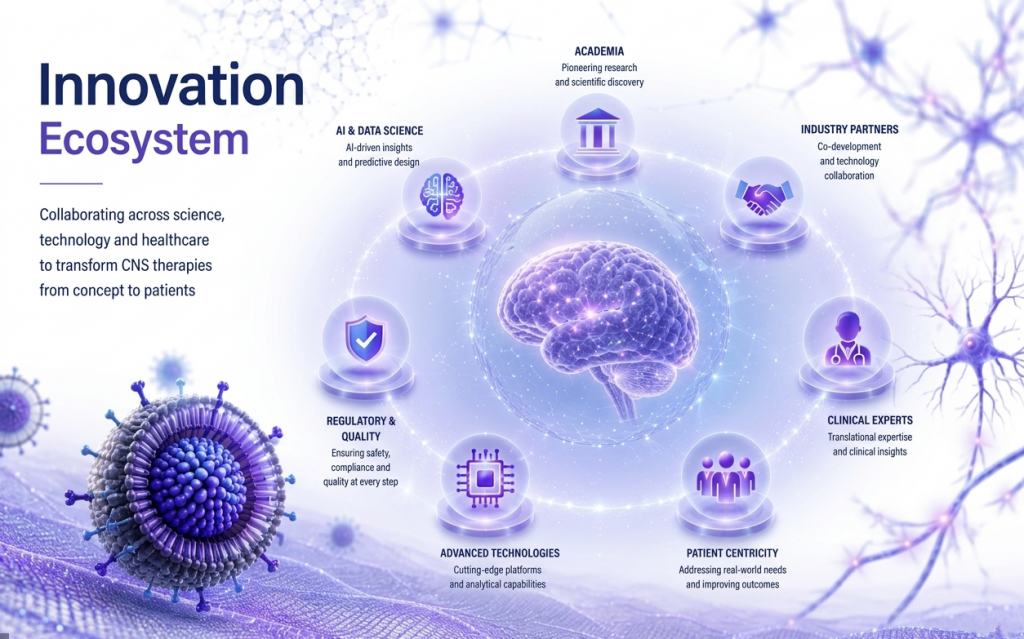
BioCyto Labs is focused on the development of next-generation AI-enabled therapeutic and delivery platforms through interdisciplinary collaboration spanning computational biology, translational nanomedicine, and CNS-focused therapeutic engineering. The company’s innovation model is designed to bridge advanced computational discovery with practical translational development, enabling agile progression from therapeutic concept generation to experimental validation and optimisation.
BioCyto’s translational activities are intended to support future collaboration opportunities with leading biopharmaceutical organisations, research-intensive academic institutions, and international innovation programmes addressing high-unmet-need CNS disorders and advanced therapeutic delivery challenges.
BioCyto is developing a portfolio of translational initiatives centred on intelligent therapeutic delivery systems, precision nanomedicine, and AI-assisted formulation optimisation for complex CNS disease environments. These programmes integrate machine learning, systems biology, nanoparticle engineering, and targeted experimental workflows to support the development of scalable therapeutic platforms with translational potential.
The company’s collaborative approach is aligned with emerging models of distributed biopharmaceutical innovation involving specialist platform companies, pharmaceutical partners, translational research centres, and multidisciplinary academic consortia.
BioCyto Labs aims to contribute to the future of precision neurotherapeutics by developing adaptable platform technologies capable of supporting advanced therapeutic modalities, targeted CNS delivery strategies, and translational optimisation workflows. Through strategic partnerships and innovation-led collaboration, the company seeks to accelerate the development of intelligent therapeutic systems positioned for future clinical and commercial translation.
BioCyto is developing a strategically aligned intellectual property portfolio focused on advanced nanomedicine architectures, AI-enabled formulation technologies, CNS-targeted delivery systems, and translational therapeutic platforms. The company’s IP strategy is designed to support future clinical translation, industrial partnerships, and commercialisation opportunities.
The portfolio comprises both wholly owned and collaboratively developed patent families arising from multidisciplinary innovation activities spanning computational modelling, biomimetic delivery systems, and advanced therapeutic formulation design. Where appropriate, BioCyto has secured structured rights and strategic participation in jointly developed technologies to support downstream development and future exploitation activities.